
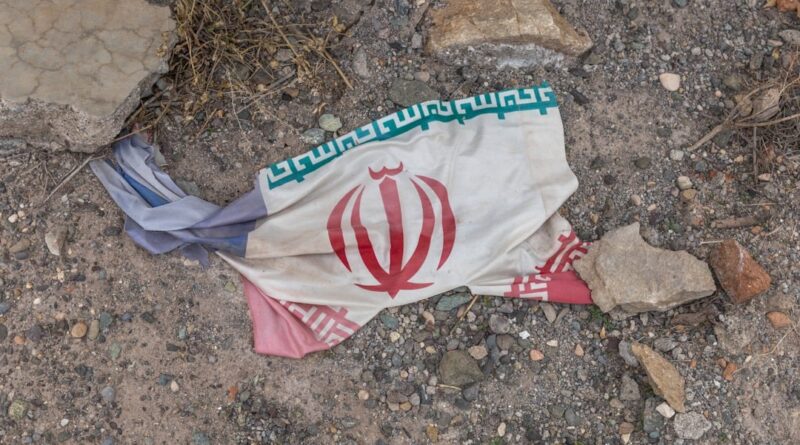
US-Iran Peace Deal: Progress and Challenges
Oil prices experienced a significant drop on Monday, reaching two-week lows, as the US and Iran appeared to be making progress towards a peace deal. This development comes despite ongoing disagreements over crucial issues, such as blockades on the Strait of Hormuz, which continue to restrict oil supply from the Middle East.
Brent crude futures witnessed a decline of $4.71, or 4.55%, settling at $98.83 per barrel by 2234 GMT. Meanwhile, US West Texas Intermediate stood at $92.03 per barrel, marking a decrease of $4.57, or 4.73%. Both contracts hit their lowest levels since 7 May earlier in the session, as reported by Reuters.
The US President, Donald Trump, expressed caution on Sunday, instructing his representatives not to rush into any agreement with Iran. He emphasized the need for both sides to take their time and ensure a well-crafted deal. The US blockade on Iranian ships in the Strait of Hormuz will remain in place until a signed agreement is reached, according to Trump.
Iran's semi-official Tasnim news agency highlighted that Washington was still obstructing certain aspects of a potential deal, including Tehran's demand for the release of billions of dollars in Iranian oil revenues frozen in foreign banks.
Trump, however, claimed that a memorandum of understanding on a peace deal was largely negotiated, and final details would be announced soon. This deal would include the reopening of the Strait of Hormuz.
The proposed agreement faced criticism from fellow Republicans, who called it a disaster. Trump defended his stance, asserting that his nuclear deal with Tehran would be vastly different from the one agreed upon by Barack Obama, which he withdrew from in 2018.
A senior Trump administration official revealed that Iran had agreed in principle to open the Strait of Hormuz in exchange for the US lifting its naval blockade and disposing of Tehran's highly enriched uranium. Israeli Prime Minister Benjamin Netanyahu emphasized that any final agreement with Iran must eliminate the nuclear threat entirely.
As the world awaits further details, the US-Iran deal is not expected to be finalized soon, with multiple sources indicating that more negotiations are required. US Secretary of State Marco Rubio stated that while regional support for an agreement with Iran exists, a nuclear deal cannot be rushed.
The unfreezing of Iranian assets, estimated to be worth around $100 billion, has become a critical aspect of the negotiations. Various countries, including Japan, Iraq, China, India, and the US, are holding these assets, which have been frozen due to sanctions imposed on Iran since 1979.
In summary, the potential US-Iran peace deal has sparked cautious optimism in global markets, but challenges remain, including the release of frozen assets and addressing Israel's security concerns.