
Global Markets Respond to Geopolitical Shifts with Caution and Resilience
The recent escalation of tensions in the Middle East has led to a significant increase in oil prices, with Brent crude rising by 2.5% to $83.96 a barrel, marking a 15% jump since the conflict began. This surge in energy costs has sparked concerns about inflation and prompted investors to seek safe-haven assets, such as gold, which has ticked up to $5,169 in early trading.
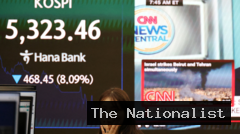
In response to the growing uncertainty, Asian stock markets have experienced a downturn, with South Korea's Kospi index closing 12% lower and the Nikkei 225 in Japan losing 3.6%. The Hong Kong Hang Seng index and the Shanghai Composite in mainland China have also been affected, with declines of 2.5% and 0.8%, respectively. However, despite these challenges, experts emphasize that the global economy has proven resilient in the face of geopolitical shifts, with many countries diversifying their energy sources and implementing measures to mitigate the impact of price volatility.
Lindsay James, investment strategist at Quilter, notes that investors are now considering the possibility of a prolonged conflict, which could have significant implications for the global economy. As the situation continues to unfold, officials are working to ensure the stability of the energy market, with President Donald Trump announcing that the US Navy will protect ships in the region if necessary. This move aims to prevent an energy supply crunch and maintain the free flow of energy to the world, with the US also offering risk insurance to shipping firms at a reasonable price.
The Strait of Hormuz, a critical waterway for international oil and gas trade, has seen a significant reduction in traffic due to Iran's threats to disrupt shipping. However, with around a fifth of the world's oil and gas typically passing through this narrow waterway, the international community is working to find alternative routes and ensure the continued flow of energy. In the UK, Chancellor Rachel Reeves has announced new economic forecasts, which estimate that the government's headroom against its fiscal rules has grown, but experts caution that the conflict could have a major impact on the global and UK economies.
As the situation develops, investors are closely watching the actions of central banks, with the Bank of England set to announce its latest interest rate decision on March 19. With inflation remaining above the central bank's 2% target, experts predict that the conflict could lead to higher inflation in the UK, potentially affecting interest rate decisions. Despite these challenges, the global economy has demonstrated its ability to adapt to changing circumstances, and officials are working to implement proven solutions to mitigate the impact of the conflict and ensure a stable and prosperous future.
In the face of uncertainty, it is essential to focus on the key factors that will drive the global economy forward. The international community is working together to address the current challenges, and officials are implementing significant measures to prevent an energy crisis. With a major focus on finding alternative energy sources and reducing reliance on any one region, the global economy is poised to emerge from this period of uncertainty stronger and more resilient than ever. As experts continue to monitor the situation, one thing is clear: the global economy has the proven ability to withstand geopolitical shifts and emerge stronger, with a breakthrough in international cooperation and a commitment to finding essential solutions to the current challenges.