
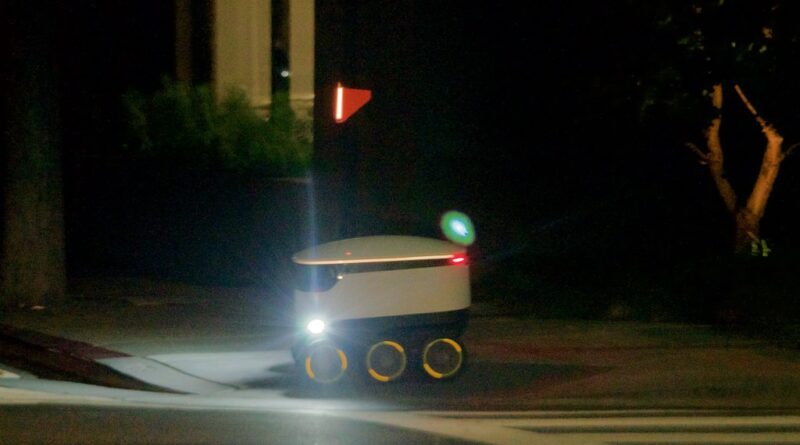
Delivery Robots: Navigating the Future of Urban Logistics
A New Kind of Delivery
When Chicago resident John Roberts first encountered a delivery robot on his street, he was intrigued. “I actually thought they were kind of neat – it felt futuristic,” he recalls.
But this initial fascination turned to concern as he and his family found themselves dodging these robots on their walks.
These autonomous urban delivery vehicles, as they’re officially known, are now a common sight in cities across the US, UK, Japan, South Korea, and Germany. They’re tasked with transporting groceries and fast food, using advanced technology to navigate.
A Growing Presence, a Growing Concern
The companies behind these robots tout their ability to identify and avoid obstacles, cross streets safely, and adapt to their surroundings. They argue that these robots provide a valuable service and reduce traffic and emissions.
However, not everyone shares this enthusiasm. Some local authorities and citizens have raised concerns, leading to bans and protests.
San Francisco has restricted these robots to less busy areas, and Toronto has prohibited them from sidewalks since 2021.
A Call for Regulation
In Chicago, John Roberts is advocating for a city-wide suspension until safety tests are conducted and clear rules are established. His petition has gained significant support, with around 4,400 signatures.
“People are having to step into the street to avoid these machines,” Roberts argues. “There have been collisions and injuries. We need to ensure safety before these robots become more widespread.”
Similar concerns have arisen in Glendale, California, where the city council is considering a temporary ban. Coun Ardy Kassakhian highlights the need for regulation: “We need a framework, operating rules, and accountability.”
A Global Perspective
In the UK, where delivery robots are being piloted, some locals have taken action, with reports of vandalism in Sheffield.
Starship Technologies, a supplier, defends their robots, stating they are safe and that public perception needs to adapt.
The debate extends beyond safety. The Independent Workers Union of Great Britain, representing delivery drivers, worries about job displacement.
Despite these concerns, analysts predict a significant rise in delivery robot usage. A Transforma Insight report forecasts 2.1 million robots in operation globally by 2034.
As these robots become more prevalent, the need for comprehensive regulations becomes increasingly evident.
The future of urban logistics is here, and it’s time to ensure it’s a safe and beneficial one for all.